
Haematology
Milano
Via Giacomo Venezian, 1 , 20133 Milano MI
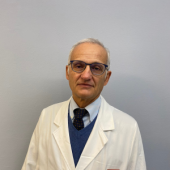
The Complex Unit (S.C.) of Haematology at the IRCCS National Cancer Institute (INT) is responsible for the diagnosis and treatment of haematological cancers in adult patients. The Unit provides outpatient consultations, diagnostic procedures such as bone marrow biopsies and lumbar punctures, treatment on an outpatient basis, in the Day Hospital and in the inpatient ward, as well as clinical and experimental research thanks to the availability of a dedicated laboratory.
The Complex Unit of Haematology is strongly focused on the use of innovative treatments, through the use of new drugs, new immunotherapies (bispecific antibodies, antibody-drug conjugates, checkpoint inhibitors, immunomodulators, Bruton’s tyrosine kinase inhibitors), autologous and allogeneic haematopoietic stem cell transplantation, and chimeric antigen receptor T-cell (CAR-T) therapies; thanks to access to innovative therapies, it has become a national centre of excellence for the treatment of patients with advanced and difficult-to-treat disease.
The department aims to provide patients with the best available care and to develop innovative therapeutic strategies for onco-haematological conditions.
The mission of the Haematology Department is not only to provide the best available treatments, but also to ensure that patients receive the human support and understanding that those affected by the serious conditions treated at the Institute undoubtedly require. The comprehensiveness, adequacy and effectiveness of patient care are confirmed by patient satisfaction surveys conducted regularly by the Lombardy Region, which show a high level of appreciation for the Haematology Department among users. Physiotherapy and psychological support form part of the treatment programmes.
Inpatient wards and outpatient clinics: The Complex Haematology Unit has 8 outpatient clinics, a day hospital, and two inpatient wards with a total of 18 beds, dedicated to the treatment of haematological malignancies and the management of their complications; all 18 beds are suitable for Phase I trials, 6 for allogeneic transplantation, and 10 for CAR-T therapy. Inpatient treatment includes conventional-dose chemotherapy, high-dose chemotherapy, autologous bone marrow transplantation, and haematopoietic stem cell transplantation from a family donor (HLA-identical or HLA-haploidentical) or from a bank donor. The Haematology Department is accredited to perform all types of transplants and has been approved for seven different CAR-T therapies (axi-cel, tisa-cel, brexu-cel, liso-cel, ide-cel, cilta-cel, anito-cel). [Accreditations: JACIE (Joint Accreditation Committee-ISCT (Europe) & EBMT), EBMT (European Group for Blood and Marrow Transplantation), GITMO (Italian Bone Marrow Transplant Group) and CNT (National Transplant Centre)].
With regard to cell therapies and transplant procedures, between 2019 and the end of 2024, the following were carried out:
- 158 CAR-T treatments, 141 in patients with non-Hodgkin’s lymphoma (diffuse large B-cell or high-grade lymphoma, primary mediastinal lymphoma, mantle cell lymphoma, follicular lymphoma), and 17 in patients with multiple myeloma;
- 90 allogeneic transplants from MUD donors, identical relatives, and haploidentical relatives, in 33 patients with myeloid disorders, 19 with Hodgkin’s lymphoma, 37 with non-Hodgkin’s lymphoma, and 1 with multiple myeloma;
- 295 high-dose chemotherapy regimens with autologous transplant reinfusion, 172 in patients with multiple myeloma, 82 with non-Hodgkin’s lymphoma and 41 with Hodgkin’s lymphoma.
The Experimental Haematology Research Laboratory
The Haematology Department laboratory, located on the mezzanine floor of Block 2B, comprises rooms furnished and equipped with laminar flow hoods for cell cultures, incubators, thermostatic baths, direct and inverted light microscopes, thermal cyclers for nucleic acid amplification, and electrophoresis chambers. It is a facility dedicated to the diagnostic and prognostic assessment and monitoring of haematological malignancies (acute and chronic leukaemias, lymphomas, multiple myeloma). The laboratory provides significant support to clinical practice through the use of methods involving NGS technologies for the most advanced oncohaematological diagnostics. It is also involved in monitoring CAR-T cells and lymphocyte populations activated by immunotherapies, as well as monitoring minimal residual disease via liquid biopsy.
In the field of allogeneic transplantation, the laboratory performs serial monitoring of B- and T-cell reconstitution using molecular and flow cytometric methods.
Clinical Research Activities
The clinical research activities of the Haematology Unit are aimed at improving conventional treatments and developing innovative therapeutic approaches and transplant strategies. The Haematology Division participates in numerous clinical trials (Phase I, II and III), both as a coordinating centre and as a participating centre, with the aim of studying and improving new cell therapies using CAR-T, bispecific antibodies or new drugs for the treatment of haematological malignancies.
Teaching Activities
Prof. Paolo Corradini, Head of the Haematology Department, is a Full Professor of Haematology at the University of Milan. The Department of Haematology serves as a teaching and training centre for students on the Haematology Specialisation programme, for students at the Faculty of Medicine and Surgery of the University of Milan (UniMI) and for students at UniMI’s International Medical School. Furthermore, the laboratory provides training for students on the Medical Biotechnology degree programme at the University of Milan. (http://www.unimi.it).
We have launched this booking service for initial oncology and haematology consultations at the National Cancer Institute, with a dedicated mobile number.
Patients with a recent diagnosis or suspected diagnosis of an oncology or haematological condition can book directly by telephone or via WhatsApp and will be seen at the Urgent Initial Consultations Clinic of the Haematology Department at the National Cancer Institute.
Onco-haematological consultations for: myeloma, lymphoma, myelodysplasia, myeloproliferative disorders, leukaemia, splenomegaly, lymphadenopathy, thrombocytosis/erythrocytosis/neutrophilia/eosinophilia/basophilia, non-deficiency cytopenias.
Appointments can be booked between 8.30am and 3.45pm, including via WhatsApp on the dedicated number: 348 019 7916
Through the NHS: Initial consultations, check-ups and specialist consultations take place every day from 9.00 am to 3.30 pm at the Haematology Outpatient Clinic (4th floor, Block E), subject to prior booking by telephone on the dedicated numbers (+39) 02 2390 2045/3921 from Monday to Friday, 8.00 am–3.30 pm, or by email: ematologia@istitutotumori.mi.it, providing the patient’s full name, date of birth and telephone number. Through the Institute’s CUP (Central Booking Office) (02 23901 from 8.00 am to 7.00 pm), which, in addition to the patient’s details, requires a referral from the attending GP for an Onco-Haematological Consultation.
In the event of an urgent condition, outpatient consultations are guaranteed within 48 hours.
Consultations are not provided over the telephone or via material sent by fax or email.
Prior to the consultation, you must register at the CUP counters, bringing your identity document, health card and referral from your GP.
For appointments with private practitioners, you can call the CUP on 0223901 between 2.00 pm and 7.00 pm, or call (+39) 02 2390 3408 between 9.00 am and 4.00 pm .
At the Haematology Department, in addition to autologous and allogeneic transplant procedures (more than 700 transplants have been performed over the last 10 years), we offer the latest generation of immunotherapies. These represent a key strength and a focus of clinical and research interest for our Department, and are regarded both nationally and internationally as at the forefront of haematological therapies.
In the field of cell therapy, we were the only Italian centre to participate as early as 2017 in a clinical trial using CAR-T cells in aggressive lymphomas. Since 2018, a CAR-T Team has been established at the Institute, coordinated by the Haematology staff. From 2019 to the present, our Division has treated more than 180 patients with aggressive lymphoma, primary mediastinal lymphoma, mantle cell lymphoma, follicular lymphoma, and relapsed and refractory multiple myeloma. For patients who are not eligible for cell therapy or who have failed CAR-T treatment, compassionate use programmes or experimental protocols involving bispecific antibodies are currently underway for both lymphomas and myeloma, and numerous patients have been treated with these innovative therapies. Bispecific antibodies represent a very promising therapy for relapsed haematological patients.
For patients with haematological cancers, the best available treatments can also be accessed through clinical trials involving innovative drugs not yet on the market in Italy. Indeed, the Haematology Department conducts phase I, II and III clinical trials in the fields of chemotherapy, immunotherapy and anti-infective therapy.
The department has a team of Data Managers and Research Nurses to support the conduct of clinical trials, as well as an experimental haematology laboratory.
- Non-Hodgkin’s lymphoma
- Hodgkin’s lymphoma
- Chronic lymphocytic leukaemia
- Acute myeloid leukaemia
- Chronic myeloid leukaemia
- Multiple myeloma
- Myelodysplastic syndromes
- Myeloproliferative syndromes
- Tel: 0223902343
Opening hours: 9.00 am – 4.00 pm
Visiting hours for medical representatives: by appointment only. Any agreed meetings must take place outside the inpatient and outpatient areas designated for patients
- Tel: 0223902045
- Tel: 0223903921
Opening hours: 8.00 am – 3.30 pm
Access times for medical representatives: by appointment only. Any agreed meetings must take place outside the inpatient and outpatient areas designated for patients
- Tel: 0223903408
Opening hours: 9.00 am – 4.00 pm
Visiting hours for medical representatives: by appointment only. Any agreed meetings must take place outside the inpatient and outpatient areas designated for patients
Prof. Corradini Paolo
Direttore di struttura complessa
Dott.ssa Chiappella Annalisa
Staff Physician
Dott.ssa Devizzi Liliana Franca
Staff Physician
Dott.ssa Di Chio Maria Chiara
Staff Physician
Dott.ssa Dodero Anna
Staff Physician
Dott.ssa Farina Lucia
Staff Physician
Dott.ssa Guidetti Anna
Staff Physician
Dott. Marasco Vincenzo
Staff Physician
Dott.ssa Matteucci Paola
Staff Physician
Dott.ssa Pennisi Martina
Staff Physician
Dott.ssa Rusconi Chiara
Staff Physician
Dott.ssa Barone Angelica
Contract Physician
Dott.ssa Ceparano Giusy
Contract Physician
Dott. Fardella Eugenio
Contract Physician
Dott.ssa Carniti Cristiana
Biologist and Researcher
Dott.ssa Bermema Anisa
Data manager
Specializzandi
- Gabriele Savoca
- Silvio Rao
- Jenny Mantovani
- Malvina Matera
- Vittorio Bolis
- Emanuele Guido
- Akill Houseyin
- Lorenzo Sabini
Biologi e ricercatori:
- Dr.ssa Martina Magni
- Sadhana Jonnalagadda
- Giarda Zanirato
- Federica Fuzio
- Ileana Irrigati
Data manager:
- Dott.ssa Barbara Formisano
- Dott. Stefano Mercandalli
Infermiere di ricerca:
- Chiara Ghidoli
- Teresa Grimaldi
Coordinatrici infermieristiche
- Giorgia Gobbi
- Lucia Saracino
Segreteria
Attività Cliniche:
- Giacomo Leone
- Federico Zanetti
Attività Scientifiche:
- Dr.ssa Anna De Filippo
- Dr.ssa Elena Maggioni
A Modular Phase I/II Open-label, Multicenter Study to Evaluate the Safety, Pharmacokinetics, Pharmacodynamics, Immunogenicity, and Efficacy of AZD4512 Monotherapy or in Combination With Other Anticancer Agent(s), in Part
A Phase 3, Randomized, Open-Label, Multicenter Study to Compare the Efficacy and Safety of Arlocabtagene Autoleucel (BMS-986393), a GPRC5D-directed CAR-T Cell Therapy, Versus Standard Regimens in Adult Participants with
A phase I/II b (randomized controlled) study of atezolizumab combined to BEGEV regimen as first salvage treatment in patients with relapsed or refractory Hodgkin’s lymphoma candidate to autologous stem–cell transplantati
A Phase II study evaluating efficacy of KTE-X19 CAR-T cell therapy in Relapsed or Refractory Mantle-Cell Lymphoma achieving a partial response during Ibrutinib salvage therapy
A phase-2 academic trial testing, in two parallel non-randomized cohorts, the combination of ruxolitinib (JAK1/2 inhibitor) with brentuximab or pembrolizumab in relapsed or refractory classical Hodgkin lymphoma (cHL)
An open-label, randomized phase III trial comparing local radiotherapy alone or combined with Obinutuzumab in early stage Follicular Lymphoma: the GAZEBO Trial from the Fondazione Italiana Linfomi
Efficacy and safety of frontline tislelizumab in patients with de novo Hodgkin lymphoma unsuitable for standard frontline chemotherapy: a phase II, open-label study.
Phase I/II, open-label, multi-center study to evaluate the safety and efficacy of glyco-humanized polyclonal antibody directed against tumoral T cells, in patients with relapsed/refractory peripheral T cells lymphoma (PT
Pilot phase II study of Selinexor in combination with Ifosfamide, Etoposide and Dexamethasone (SIDE) in patients with relapsed or refractory Peripheral T-cell Lymphomas.
Venetoclax and delayed rituximab with ibrutinib consolidation aiming at undetectable minimal residual disease (uMRD) in treatment-naïve patients with chronic lymphocytic leukemia (CLL)
Last update: 22/04/2026